
Project Story
Dead Lawn to Desert-Modern: Inside a Dana Point Front Yard Transformation
June 16, 2026 · Gavin Mohrmann, Orange Path Landscaping
The Starting Point
The homeowner — a Dana Point resident who's been in the house for about six years — called me this spring. Their front lawn was done. Not struggling, not patchy. Done. The grass had been slowly dying for two years, they'd cut back watering after the rate hikes, and honestly, it just wasn't worth saving.
The yard is small — about 850 square feet total, which is pretty typical for that neighborhood. Mostly flat with a slight grade toward the street. An old pop-up sprinkler system, probably installed in the late 90s. A few overgrown boxwood hedges along the foundation. One decent-sized queen palm off to the left that we're keeping.
Their ask: something modern, low-water, and low-maintenance. They'd seen a few desert-modern yards around the area and liked the clean lines, the decomposed granite, the bold plants. They didn't want it to look like a cactus garden from a highway median. Fair enough.
Budget: $22,000 all-in. Realistic for what they want.
This post is a look inside how we're approaching the design — the decisions, the plant list, the material choices, and why.
What We're Pulling Out
First order of business is a full demo: sod (what's left of it), the old boxwood hedges, and the entire sprinkler system. Every head, every lateral line, the old valve box. The main supply line from the meter is still good, so we'll cap and save that for the new drip system.
No herbicide — the homeowners don't want it, and I rarely push for it on a job this size.
We'll also do some rough grading. I want to add a planting berm on the right side of the yard — nothing dramatic, maybe 10 inches at the peak. It breaks up the flatness and gives the plants something to work with visually.
The Design: What We're Choosing and Why
Here's where a lot of desert-modern projects go wrong. People go too heavy on rock and too light on plants, and the yard ends up looking like a parking lot with a cactus in it.
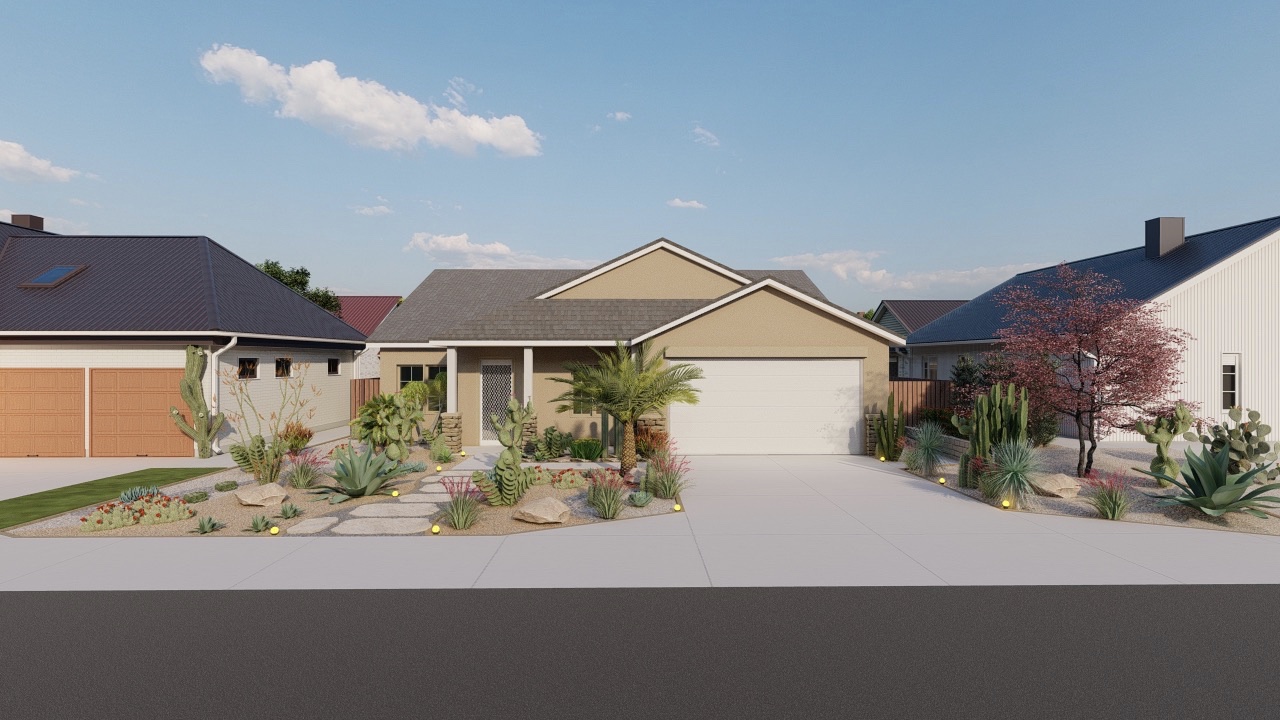
The plan we've landed on:
The plant list isn't exotic or expensive. Here's roughly what we're working with at wholesale:
Total plant material: around $450 wholesale. You don't need to spend a fortune on plants to get a strong look — you need good placement and the right backdrop.
Hardscape and Irrigation Plan
The stepping stone path will be poured and formed on-site — a 3.5" slab, scored joints, no sealer. An unsealed concrete path weathers better and looks more intentional in a desert landscape than the glossy stuff.
For irrigation, we're running two new drip zones — one for the berm plantings, one for the foundation bed. Half-inch poly mainline with individual emitters at each plant, plus a pressure regulator at the valve. The whole system will tie into their existing controller, which has an open zone. That saves them probably $400 versus running a new controller.
The DG goes down in two passes: compacted base first, then the finish layer. We use a plate compactor on the base — skip this step and you'll get soft spots and ruts within a year. Under the DG, we're laying a 4-oz non-woven polypropylene weed barrier. Not the cheap stuff from a big box store. It costs more but it lasts.
What a Project Like This Costs
For anyone thinking about a similar conversion, here's how the budget breaks down:
**Total: ~$21,000**
What I'd Tell Any South OC Homeowner Thinking About This
A few honest takeaways:
If you're sitting on a lawn that's on its way out, this is the conversation to have before another summer goes by. Book a call and we'll walk your yard together.
Have a question about your yard?
Book a free 30-minute call and get a straight answer.
Book a Free Consultation